

Height is one of the two measurements that decide whether a squirrel baffle works, the other being distance from anything a squirrel could jump from. Get the height wrong and even a well-built baffle mounted on the right pole can still get bypassed. This guide covers how high to mount the baffle itself, how that changes by mount type, and why height alone isn’t the whole story.
New to baffles entirely? Start with Squirrel Baffles: The Complete Guide, or How to Install a Squirrel Baffle if you already have one to mount.
The General Rule of Thumb
Most installation guidance settles on roughly the same range: mount the baffle itself at least 4 to 5 feet above the ground, and hang the feeder another 2 to 3 feet above the baffle. That puts the seed itself well out of reach of a standing or lightly jumping squirrel, while the baffle blocks the climbing route in between.
Treat this as a starting point rather than a fixed rule. A squirrel’s standing jump varies by species and by individual, and a determined squirrel in a yard with few other food sources will try harder than one with easy meals elsewhere. If squirrels keep reaching a feeder mounted at the low end of this range, moving the baffle higher is a reasonable first adjustment before assuming the baffle itself has failed.
Why Height Alone Isn’t Enough
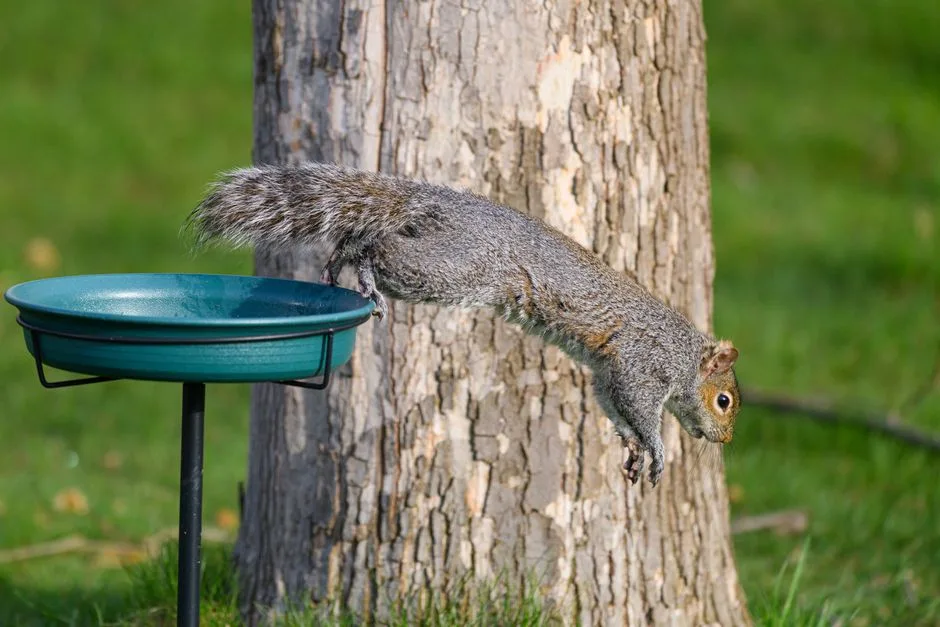
A baffle mounted at the right height still fails if a squirrel can skip the climb entirely by jumping in from the side. Squirrels are capable horizontal jumpers, not just vertical climbers, and a nearby tree branch, fence rail, or roofline can put a feeder within reach regardless of how high the baffle sits on the pole. Height and horizontal clearance work together, not separately. See How to Stop Squirrels From Jumping Over a Squirrel Baffle for how far away to keep those jump-off points.
Height Guidelines by Mount Type
4×4 Wooden Post
A 4×4 post is usually set deep enough that you have plenty of pole length to work with, so aim for the higher end of the 4 to 5 foot range if the post allows it. Since posts are typically fixed in concrete or deep in the ground, there’s little risk of the extra height making the whole setup unstable the way it might on a lighter, freestanding pole.
Shepherd Hook
Shepherd hooks are shorter and lighter than a 4×4 post, and often just pushed into soil or lawn rather than set in concrete. Mounting the baffle near the top of the available pole length is still the right call, but check that the hook itself is planted firmly enough to stay upright at that height, a hook that leans or wobbles undermines the baffle regardless of where it sits.
Straight Feeder Pole
Dedicated feeder poles are usually the tallest option and the easiest to hit the full recommended height on. If your pole holds more than one feeder or accessory, keep in mind that a taller stack raises the whole assembly’s center of gravity, check the base is rated for the added height and weight before loading it up.
Hanging Feeders
For a feeder hanging from a branch or a bracket rather than a pole, the same overall height above ground still applies, but the baffle’s job is different: it sits directly above the feeder on the hanging wire or chain, blocking a squirrel from climbing down the support line rather than up a pole. Height above ground matters less here than making sure the baffle fully covers the hanging point.
Common Height Mistakes
- Mounting the baffle too low. Anything within easy reach of a standing squirrel defeats the point of a baffle regardless of how well it’s built.
- Hanging the feeder too close above the baffle. A squirrel that reaches the top edge of the baffle can sometimes still stretch to the feeder if the gap between them is too small.
- Assuming taller is always better without checking stability. On a lightweight pole or hook, extra height can make the whole setup more prone to leaning or tipping, which undoes the benefit.
- Ignoring height on hanging setups. A dome baffle mounted at the wrong point on the hanging line can leave a gap a squirrel slips through even if the overall height looks right.
How to Check If Your Height Is Working
Watch the setup over a few days rather than judging after one visit. A squirrel checking out a new baffle will often try repeatedly before giving up, so a single failed attempt doesn’t confirm the height is right, and a single success by the squirrel doesn’t necessarily mean the whole setup has failed either. If a squirrel is consistently reaching the feeder after several days, work through Why Is My Squirrel Baffle Not Working? to check height, distance, and fit together rather than adjusting height alone.
Frequently Asked Questions
What if my pole isn’t tall enough to hit the recommended height?
A shorter pole still benefits from mounting the baffle as high as the pole allows, even if that falls short of the ideal range, some added height is better than none. Focus extra attention on distance from jump-off points in that case, since a shorter setup has less margin if a squirrel supplements a shorter climb with a nearby jump. See our Best Squirrel Baffle for a Bird Feeder Pole roundup if you’re due for a taller pole upgrade.
Does baffle height matter more than feeder height?
They work together rather than one mattering more. The baffle blocks the climbing route up the pole, while the gap between the baffle and the feeder keeps a squirrel from stretching across from the baffle’s edge. A baffle mounted correctly with the feeder hung too close above it can still fail, so treat both measurements as part of the same setup rather than optimizing one and ignoring the other.
How do I measure height accurately on an uneven yard?
Measure from the actual ground level directly beneath the baffle or feeder, not from a nearby flat patch, since even a few inches of slope or a raised flower bed can meaningfully change a squirrel’s effective jump. If the ground around the pole isn’t level, measure from the highest point a squirrel could realistically stand or launch from nearby.
Can I mount a baffle too high?
There’s more downside to mounting a baffle too low than too high, but very tall setups have their own tradeoffs: a taller pole is more prone to leaning under wind or weight, and a very high feeder becomes harder to refill and observe. Aim for the recommended range rather than maximizing height for its own sake. If you’re unsure, aim for the middle of that range rather than either extreme, and plan to recheck the height after the first season, since a pole or hook can settle or shift slightly in the ground over time.
Should I raise the baffle right away if I see a squirrel nearby, even if it hasn’t reached the feeder yet?
Not necessarily. A squirrel investigating a feeder from a distance is normal and doesn’t mean the current height has failed, many will attempt a climb, fail, and move on repeatedly before giving up entirely. Wait to see whether the squirrel actually reaches the feeder over a few days before deciding the height needs to change.
Write Your Review
No reviews yet. Be the first to share your experience!