

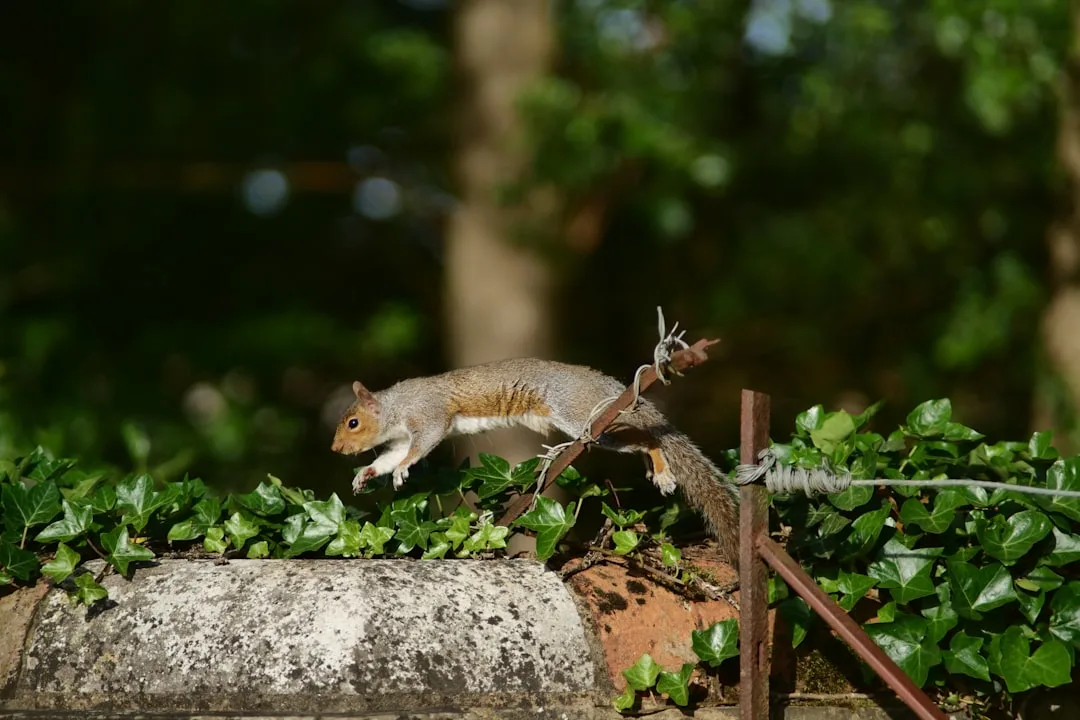
A baffle mounted at the correct height can still fail if a squirrel skips the climb entirely and jumps in from the side. This is a different problem than mounting height, and it needs a different fix: instead of raising the baffle, you need to change what’s within jumping distance of the feeder. This guide covers how far squirrels can realistically jump and what to do about the jump-off points in your yard.
If you haven’t checked mounting height yet, start with How High Should a Squirrel Baffle Be?, since height and jump distance work together, not separately.
How Far Can a Squirrel Actually Jump?
Squirrels are capable horizontal jumpers relative to their size, and estimates commonly cited by wildlife and extension resources put a determined squirrel’s horizontal jump in the range of several feet from a solid launch point like a branch or fence rail, with even more distance possible on a downward jump from something higher than the feeder itself. Treat any specific number as a rough guide rather than a guarantee, individual squirrels vary, and a hungry, motivated squirrel will push the limits of what it can manage.
The practical takeaway is that “close” is relative to the squirrel, not to you. A gap that looks wide enough by eye can still be within range, especially if the jump is downward from a roofline or overhanging branch rather than a level jump across open ground.
Identify the Jump-Off Points in Your Yard
Walk around the feeder and look at it from likely launch points rather than just measuring straight-line distances on paper. Common jump-off points include:
- Tree branches overhanging or near the feeder, including ones that seem too thin to hold a squirrel’s weight
- Fence tops and rails, especially wood or chain-link fences a squirrel can also climb to reach
- Rooflines, gutters, and sheds close enough to allow a downward jump
- Patio furniture, trellises, or other structures that might be moved seasonally, which can quietly close the gap without anyone noticing
Fixes That Actually Address Jumping
Move the Feeder Farther From Structures
The most reliable fix is also the simplest: relocate the pole or feeder to a spot with more open space around it. If moving it entirely isn’t practical, even a modest increase in distance from the nearest jump-off point can put the feeder out of range.
Trim Back Overhanging Branches
If a tree branch is the culprit, trimming it back can close off that specific route. Only trim what you’re confident is safe to cut, avoid removing large limbs from a living tree if you’re not experienced with pruning, and hire an arborist for anything near power lines or too high to reach safely from the ground. Some trees are also protected by local ordinances, so check before removing significant branches, especially in a shared or HOA-managed yard.
Add a Second Baffle or Wider Coverage
When a single jump-off point can’t be moved or trimmed, a wider baffle, or in some setups a second baffle positioned to cover an angle the first one doesn’t, can reduce the usable landing area a squirrel has to work with, even if it doesn’t eliminate the jump distance itself.
Upsize the Baffle Itself
A baffle with more diameter or a wider flare gives a jumping squirrel less to grab near the top edge, since there’s more horizontal distance between the jump-off point and any part of the baffle a squirrel could catch. This isn’t a substitute for adequate clearance, a bigger baffle on a feeder that’s already within easy jumping range won’t fully solve the problem, but it’s a legitimate way to add margin once you’ve already trimmed and repositioned as much as practical. See our Best Squirrel Baffles for Bird Feeders roundup for larger-diameter picks.
Accept a Longer-Term Landscaping Change
In some yards, the real fix is landscaping rather than hardware, moving a fence line, choosing a different spot for a new tree, or relocating the feeder setup entirely when the yard is redesigned. This isn’t always practical short term, but it’s worth keeping in mind if you’re planning other yard changes anyway.
When Jumping Isn’t the Real Issue
If you’ve checked distance from every plausible jump-off point and squirrels are still reaching the feeder, the cause may be something else entirely, wrong baffle height, a fit or mounting problem, or a baffle material that isn’t holding up. See Why Is My Squirrel Baffle Not Working? for the full troubleshooting checklist.
Frequently Asked Questions
How far away from a tree or fence is actually far enough?
There’s no single safe distance that applies to every yard, since it depends on the height of the jump-off point relative to the feeder, a downward jump from a roofline covers more ground than a level jump from a fence rail. As a starting point, keep the feeder several feet clear of the nearest branch, fence top, or roof edge, and treat that as a minimum rather than a guarantee. Watch the feeder for a few days after any change, since a squirrel investigating a new gap will usually attempt it repeatedly before you know whether the distance actually holds.
Will trimming one branch fix the problem for good?
Only if that branch is the sole jump-off point, which isn’t always the case. Squirrels are opportunistic, and a yard with a fence, a shed roof, and a tree all near the feeder gives them several routes to test, not just one. Walk the full perimeter around the feeder after trimming and check for any other launch point before assuming the issue is resolved, and recheck again after storms or seasonal growth, since branches and shrubs change over time.
Does a wider baffle replace the need for distance from jump points?
No. Distance and baffle diameter solve different parts of the same problem, distance keeps a squirrel from reaching the feeder’s general area in the first place, while diameter reduces how much a squirrel can grab near the top if it does get close. A large baffle mounted a few feet from an overhanging branch still gets bypassed, since the squirrel never needs to touch the baffle at all. Fix placement first, then treat baffle size as added margin, not a substitute.
What if squirrels are reaching the feeder from directly below, not from a jump?
A squirrel standing at the base of the pole and reaching or jumping straight up is a mounting-height issue, not the horizontal jump-off problem this guide covers. The two causes can look similar day to day, seed disappearing, squirrel on the feeder, but the fix is different: check that the baffle and feeder sit high enough off the ground rather than looking for a nearby launch point. See How High Should a Squirrel Baffle Be? for height ranges by mount type.
Is a downward jump farther than a level jump?
Generally yes. A squirrel jumping down from something higher than the feeder, a roofline, a tall fence, or a branch above the feeder’s height, covers more effective distance than a level jump across open ground, since gravity adds to the horizontal distance it can cover. Treat any elevated jump-off point as a bigger risk than a level one at the same horizontal distance, and give it extra clearance accordingly.

Write Your Review
No reviews yet. Be the first to share your experience!