

A shepherd hook is one of the more forgiving mounts to set up, but also one of the easier ones to get subtly wrong, since the curved neck and thin shaft behave differently from a straight pole or a wooden post. This walkthrough covers the full process specifically for a shepherd hook, including the two issues that trip people up most: ground stability and picking a baffle that actually fits a hook’s thinner shaft. For a broader overview covering other mount types too, see our general squirrel baffle installation guide.
Why Shepherd Hooks Need Extra Attention
Unlike a 4×4 post set in concrete or a heavy metal pole, a shepherd hook is typically a single thin shaft pushed or driven into the ground. That makes it quick to move around the yard, but also more prone to leaning, loosening, or shifting over time, any of which can undermine an otherwise well-installed baffle.
What You’ll Need
A baffle sized for your hook’s shaft diameter, the mounting hardware included with the baffle, and a mallet or your body weight to firm up the ground around the hook’s base. If your hook is freestanding without a stabilizing base plate, you may also want a few tent-style ground stakes.
Step 1: Set and Stabilize the Hook Itself
Before worrying about the baffle, make sure the hook is solidly planted. Push or drive the shaft deep enough that it doesn’t lean under moderate pressure, and firm up the soil around the base by hand or with a mallet. A hook that shifts in the ground will tilt any baffle mounted on it, opening a gap on the low side.
In soft or sandy soil, consider a hook with a wider or reinforced base, or add ground stakes for extra stability, since standard depth alone may not hold firm through wind and rain.
Step 2: Confirm the Baffle Fits the Shaft
Shepherd hook shafts are noticeably thinner than a 4×4 post or a standard pole, so measure your hook’s diameter before choosing a baffle. A baffle designed for a thicker pole may not close snugly around a thin hook shaft, leaving it loose enough to spin or slide. Our roundup of baffles built for shepherd hooks covers options sized specifically for this thinner shaft.
Step 3: Confirm the Mounting Height
Decide on final height before attaching the baffle. Most guidance suggests mounting the baffle several feet above the ground, with the feeder hanging another couple feet above that, though a shepherd hook’s curved neck means the feeder often sits closer to the hook’s top than on a straight pole. Our baffle height guide covers this by mount type in more detail.
Step 4: Mount the Baffle Below the Curve
Position the baffle on the straight section of shaft below where the hook curves toward the feeder, not on the curved neck itself. Mounting on or too close to the curve leaves the feeder side exposed, since the baffle needs a straight run of shaft to seal against evenly.
Tighten the included clamp or set screw according to the baffle’s instructions, checking that it grips the thin shaft firmly without slipping.
Step 5: Recheck Clearance Around the Hook
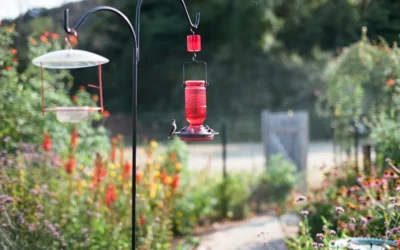
Shepherd hooks are often placed in flower beds or garden borders close to fences, trellises, or shrubs, any of which can serve as a jump-off point that skips the baffle entirely. Walk around the hook and check distance in every direction, not just toward open lawn. See our guide on safe distance from structures for what counts as a risky launch point.
Step 6: Confirm the Mount Is Secure
Gently push and rock both the baffle and the hook itself. The baffle shouldn’t slide along the shaft, and the hook shouldn’t lean or shift in the ground. If either moves more than a small amount, address that before considering the installation finished.
Seasonal Rechecks
A shepherd hook’s thin shaft and shallow ground set make it more prone to seasonal shift than a heavier post, especially after freeze-thaw cycles loosen soil in colder climates, or after heavy rain softens the ground temporarily. A quick check once or twice a year, confirming the hook is still firm and the baffle still sits level, catches problems early.
If you move the hook to a new spot in the yard, treat it as a fresh installation rather than assuming the old placement’s clearance and stability still apply. Our complete guide to squirrel baffles is a useful refresher on the full setup if you’re relocating.
Common Mistakes on a Shepherd Hook
Skipping Ground Stabilization
A loose hook undermines even a perfectly fitted baffle. Always confirm the hook itself is firm before moving on to baffle installation.
Using a Baffle Sized for a Thicker Pole
A baffle that doesn’t close snugly around a thin hook shaft can slide or spin under a squirrel’s weight, reducing how effective it actually is. Match the baffle to your hook’s measured diameter, not just its general category.
Mounting Too Close to the Curve
A baffle mounted on or right at the curved neck can’t seal evenly against the shaft. Keep it on the straight section below the curve.
A Note on Safety
Shepherd hooks are usually low enough that a ladder isn’t needed, but take care with the pointed base when driving it into the ground, and keep hands clear of the tip. Check for buried utility lines before driving a hook into a new spot in the yard, particularly near a house foundation.
If It’s Still Not Working
If squirrels are still reaching the feeder after installation, the cause is often ground stability or nearby clearance rather than the baffle itself on a shepherd hook setup. Our guide on why a squirrel baffle isn’t working covers the most common remaining causes.
Frequently Asked Questions
How deep should a shepherd hook be driven into the ground?
Deep enough that it doesn’t lean under moderate hand pressure once set, which varies by soil type. Soft or sandy soil generally needs a deeper set or additional stabilization, such as ground stakes, compared to firm, compact soil.
Can I use a 4×4 post baffle on a shepherd hook?
Generally no. A baffle built for a 4×4 post’s flat faces isn’t designed to seal around a hook’s thin, round shaft. Choose a baffle specifically sized and shaped for a shepherd hook instead, see our shepherd hook baffle roundup for options.
My hook wobbles even after I set it firmly. What should I do?
Persistent wobble usually points to soil that’s too soft or a hook that’s too thin for the load. Adding ground stakes, moving to a firmer spot in the yard, or upgrading to a hook with a wider, more stable base are all reasonable fixes.
Should the baffle be above or below the hook’s curve?
Below. The baffle needs a straight section of shaft to seal against evenly, which the curved neck near the feeder doesn’t provide.
Is a shepherd hook a good choice if I have aggressive squirrels?
A shepherd hook can work well even in high-pressure yards as long as it’s firmly set and paired with a properly sized baffle, but its lighter build means ground stability matters more than it would with a heavier straight pole. If ground stability is a recurring issue at your location, a heavier pole mount may be a more durable long-term choice.
Write Your Review
No reviews yet. Be the first to share your experience!