

Feeder height affects which birds visit, how safe they feel landing and leaving, and how easy the feeder is for you to refill and clean. There’s no single correct number, but a workable range and a few practical considerations make the decision straightforward, whether you’re hanging your first feeder or repositioning one that hasn’t attracted much activity.
The General Range
Most feeders work well somewhere between five and six feet off the ground, roughly chest to eye level for an average adult. This range keeps the feeder within easy reach for filling and cleaning while still sitting high enough that ground-level activity around the yard doesn’t spook visiting birds. It’s also a comfortable viewing height from a nearby window or patio, which is often part of the appeal of feeding birds in the first place.
Why Height Matters
Predator Awareness
A feeder too close to the ground is easier for outdoor cats and other ground predators to stalk and ambush from cover. Lifting the feeder to around five feet gives birds a clearer sightline to approaching threats and more reaction time to fly off. Keeping nearby dense shrubs or tall grass trimmed back also removes hiding spots a predator could use to close the distance unseen, a simple change that costs nothing and helps regardless of feeder height.
Squirrel Access
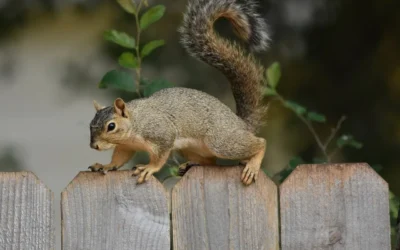
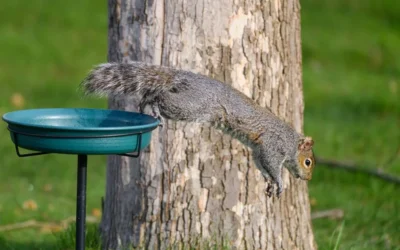
Squirrels are capable jumpers, and feeder height interacts directly with how easily they can reach a feeder from the ground or from a nearby launch point, including a deck rail, fence top, or overhanging branch. Our guide to squirrel baffle placement covers the specific distances that matter if squirrel access is a concern at your setup, since height by itself rarely solves the problem on its own.
Your Own Convenience
A feeder mounted too high becomes a chore to refill and clean, which in practice means it gets neglected. Choosing a height you can comfortably reach without a ladder makes it far more likely the feeder stays stocked and clean through the season, and regular cleaning matters for bird health, not just appearance, since old wet seed can grow mold.
Height by Feeder Type
Tube and Hopper Feeders
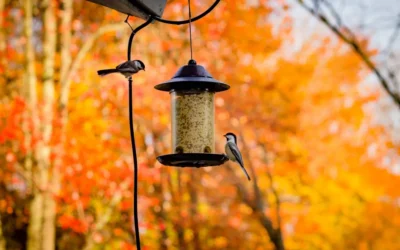
These hang comfortably in the standard five to six foot range on a pole, bracket, or sturdy branch, giving most songbirds an easy approach from multiple directions. Chickadees, titmice, and finches, the most common visitors to tube and hopper feeders, adapt readily to feeders anywhere within this range, so this is usually the easiest category to place without much second-guessing.
Platform and Ground Feeders
Some ground-feeding species, including juncos and mourning doves, prefer feeding at or close to ground level. If you want to attract these species specifically, a low platform feeder a foot or two off the ground works better than forcing everything to the same standard height. Keep in mind a low platform feeder is also more exposed to ground predators and rain pooling on the tray, so check it more often than a hanging feeder.
Suet Feeders
Woodpeckers and nuthatches, the main visitors to suet, are comfortable at a range of heights and often prefer a feeder mounted directly to a tree trunk rather than hanging freely, closer to how they’d forage naturally. Mounting a suet cage at roughly the same height as a nearby tube or hopper feeder also makes it easier to keep an eye on both from one viewing spot.
Adjusting for Your Yard
Nearby Windows
If the feeder sits near a window, height alone doesn’t solve collision risk, distance from the glass matters more. Keep real distance, more than thirty feet, or place the feeder within a few feet of the glass so birds can’t build up dangerous speed before impact. Window decals or screens can further reduce strikes for feeders positioned in the riskier middle distance if repositioning isn’t practical.
Slope and Uneven Ground
Measure feeder height from the ground directly beneath it, not from a distant reference point, especially on sloped yards where the two can differ by a foot or more. This matters most for squirrel access, since a slope can shrink the effective jump distance from a nearby bank or retaining wall even when the feeder looks correctly placed from a flat vantage point.
Multiple Feeders
Varying height slightly across a few feeders, rather than lining them all up at the same level, can reduce crowding and give more timid species a spot to feed without competing directly with more assertive ones. Spacing feeders a few feet apart horizontally as well as vertically helps further, giving birds room to choose a spot without constant close contact and reducing the odds of a full-on territorial dispute at your setup.
Wind and Weather Exposure
A feeder mounted higher up tends to catch more wind, which can swing a hanging feeder and scatter seed further from the base than a lower, more sheltered spot would. If your yard is particularly exposed, a slightly lower height or a spot with some windbreak from a fence or shrub line can cut down on wasted seed and mess.
A Note on Ladders and Reach
If your chosen height requires a ladder for regular refilling, reconsider the setup rather than accepting the risk of a fall on uneven yard ground. A feeder you can reach standing flat-footed, or with a small step stool at most, is safer for long-term regular maintenance. If a ladder is unavoidable for a particular spot, have someone else nearby and avoid working alone, especially on grass or after rain.
Frequently Asked Questions
Is there one ideal height for every feeder?
No single number works for every yard and species. Five to six feet is a reliable starting point for most hanging feeders, but ground-feeding species and suet feeders often do better outside that range. Watch which species actually show up over the first few weeks and adjust from there rather than treating the initial height as permanent, since real-world results at your specific location will tell you more than any general rule.
Does a higher feeder keep squirrels away?
Height alone rarely stops a determined squirrel, since they can jump several feet vertically and horizontally from a nearby launch point. See our baffle height guide for the distances that actually matter for squirrel exclusion, and our squirrel-proof feeder roundup if you’d rather rely on a feeder’s built-in mechanism instead of positioning alone.
Should feeder height change with the seasons?
Not usually, though deep snow can effectively raise the ground level under a feeder by a foot or more, worth checking if your feeder starts sitting unusually low relative to nearby snowdrifts. It’s also worth checking mounting hardware each spring after a winter of freeze and thaw, since ground movement can shift a pole or hook slightly out of level.
What if my only mounting option is higher than six feet?
Birds will still use a feeder mounted higher, but weigh the tradeoff against how often you’ll realistically be able to refill and clean it at that height. A feeder that’s inconvenient to maintain tends to get neglected regardless of how well-placed it is for the birds. A pulley system on a rope and hook is one practical way to lower a high feeder for refilling without needing a ladder each time.
Write Your Review
No reviews yet. Be the first to share your experience!