

A squirrel baffle that “doesn’t work” almost always has a specific, fixable cause rather than being a bad product. Before assuming you bought the wrong baffle, it’s worth working through the setup itself, since the most common causes come down to placement and fit, not the baffle’s design. This guide walks through what to check, in the order most likely to find the actual problem.
If you haven’t installed a baffle yet, start with How to Install a Squirrel Baffle. If it’s already mounted and still not stopping squirrels, keep reading.
Start With Placement, Not the Baffle
The single most common reason a correctly sized, well-built baffle still fails is that something nearby gives a squirrel another way in, most often a tree branch, fence rail, or roofline close enough to jump from. Before checking anything about the baffle itself, walk the setup and look at it from a squirrel’s likely jumping-off points. This single check resolves more “broken baffle” complaints than any hardware fix.
Work Through These Checks in Order
Is It Actually High Enough?
A baffle mounted too close to the ground gives a squirrel a standing jump straight to the feeder, no climbing required. See How High Should a Squirrel Baffle Be? for the height ranges we recommend by mount type.
Is There a Jump-Off Point Nearby?
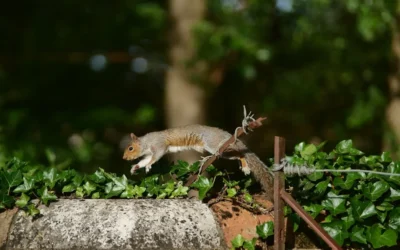
Even a baffle at the right height can be bypassed sideways. Check distance from trees, fences, sheds, and anything else a squirrel could launch from. See How to Stop Squirrels From Jumping Over a Squirrel Baffle for specific distances and fixes.
Is the Baffle the Right Size for the Pole?
A baffle that’s too loose for its pole or post can spin, tilt, or slide instead of staying in position, and a squirrel can sometimes work around a baffle that isn’t sitting where it’s supposed to. Recheck the manufacturer’s stated diameter range against your actual pole measurement, not just the general category (“shepherd hook” or “4×4 post”) the baffle was marketed for.
Is the Baffle Still Level and Secure?
Give the baffle a firm push by hand. If it’s drooped, slid down the pole, or come loose at the mounting point since installation, that’s often enough on its own to let a squirrel past. Hardware can loosen over a season of weather and repeated squirrel attempts, so a baffle that was secure at installation isn’t guaranteed to stay that way indefinitely.
Are You Dealing With More Than One Squirrel, or a Different Animal?
Some baffles that stop one squirrel struggle when two work together, one boosting the other, or when a heavier animal like a raccoon is involved rather than a squirrel. If you’re seeing a pattern that doesn’t match typical single-squirrel behavior, the baffle may need a size or rating better suited to what’s actually visiting your yard.
When the Baffle Itself Might Be the Problem
If placement, height, fit, and mounting all check out and squirrels are still getting through, the baffle’s design may genuinely be a mismatch for your situation. A lightweight plastic baffle in a yard with persistent chewing pressure, for example, wears down faster than a metal one built for the same spot. See Metal vs Plastic Squirrel Baffles: Which Is Better? to compare how each material holds up over time.
Quick Checklist
- Baffle mounted at least 4 to 5 feet above the ground
- No tree branch, fence, or roofline within jumping distance
- Baffle diameter matches your actual measured pole, not just the listed category
- Baffle still level, tight, and hasn’t slid down the pole
- Behavior matches a single squirrel, not multiple animals working together or a different species entirely
If Nothing Above Fixes It
Not every yard responds to the same setup, and a persistent squirrel population sometimes needs a combination of fixes rather than one adjustment. Revisit placement first, since it’s the most common cause by a wide margin, then work through height, fit, and mounting before assuming you need a different baffle entirely. For a broader look at baffle types and how to match one to your setup, see Squirrel Baffles: The Complete Guide.
Frequently Asked Questions
How long should I wait before deciding a baffle has failed?
Give it at least several days of normal activity before concluding it isn’t working, since squirrels often attempt a new baffle repeatedly before giving up, and a single successful raid doesn’t necessarily mean the setup has failed. Consistent daily access over a week or more is a stronger signal than one isolated success.
I fixed the height and distance, but squirrels are still getting through, what’s next?
Move to fit and mounting next, a baffle that’s technically at the right height and far enough from jump points can still fail if it’s the wrong diameter for the pole or has slipped out of position since installation. Recheck both against the manufacturer’s stated range and give the baffle a firm push to confirm it’s still level and secure.
Can squirrels adapt to a baffle that worked at first?
It happens, particularly with a persistent or growing squirrel population. A baffle that stopped a lone squirrel for months can start failing once a second squirrel learns to boost the first, or once a younger squirrel tries angles an adult hadn’t attempted. If a previously reliable setup suddenly starts failing, revisit the “more than one squirrel” check above before assuming the baffle itself has degraded.
Should I try a completely different baffle before troubleshooting the current one?
Work through placement, height, fit, and mounting first, since those account for most real-world failures and cost nothing to check. Replacing the baffle without fixing an underlying placement issue often just moves the same problem to a new product. See our Squirrel Baffles section once you’ve ruled out setup issues and are shopping for a different design.
Is it normal for a baffle to need occasional maintenance?
Yes. Hardware loosens, plastic can warp slightly in extreme heat, and metal coatings wear at contact points over repeated squirrel attempts. Check the baffle’s mount, level, and general condition a few times a year rather than assuming a one-time installation is permanent, especially after a harsh season of weather or heavy squirrel activity.
Could the problem be the feeder itself, not the baffle?
Possibly. A baffle stops climbing and jumping, but it doesn’t make the feeder itself squirrel-resistant if a squirrel reaches it by other means, or if the feeder’s perches and ports are wide enough for a squirrel to feed even while balancing awkwardly. If the baffle is working as intended and squirrels are still getting to the seed, compare your feeder against a dedicated squirrel-resistant design rather than assuming the baffle needs replacing.
Does weather affect how well a baffle performs?
Rain and wind don’t stop a baffle from working mechanically, but ice is worth watching, since a layer of ice on a spring-mounted or wobble baffle can stiffen its movement and reduce the instability that makes it effective. Clear ice off a spring or wobble baffle after a freeze if squirrel activity picks up during cold weather. Heavy snow load can have a similar stiffening effect on spring hardware, so a quick check after a major storm is worth the few minutes it takes, especially if you notice squirrels reaching the feeder more easily right after a hard freeze or heavy snowfall.
Write Your Review
No reviews yet. Be the first to share your experience!