

Ants are drawn to bird feeders by spilled seed and, especially with hummingbird or oriole feeders, sugar water residue. A steady trail of ants up a pole or across a hanging chain is a common nuisance, but it’s fixable without resorting to anything harmful to the birds themselves. The methods below focus on physical barriers and better housekeeping rather than chemical solutions, which is both safer for visiting wildlife and generally more effective long-term.
Why Ants Show Up
Ants are opportunistic foragers that follow scent trails to reliable food sources, and a feeder that regularly spills seed or drips sugar water becomes exactly that. Once a colony finds a dependable source, worker ants lay a pheromone trail back to the nest, and that trail draws more ants over time until the problem compounds. Breaking that trail early, before it becomes an established route, is much easier than dealing with an entrenched line of ants weeks later.
Prevention Methods
Ant Moats
An ant moat is a small water-filled reservoir that sits between the hanging hook and the feeder itself, creating a physical barrier ants can’t cross. This is the most reliable method for hanging feeders and is inexpensive, widely available, and simple to install on an existing setup. Check the water level every few days, especially in hot weather, since an empty moat offers no protection at all, and add a drop of vegetable oil to the water if mosquitoes become a concern in the reservoir itself.
Reduce Spillage
A feeder that spills seed onto the ground or pole gives ants an easy, constant food source regardless of any other prevention step. Switching to a feeder with tighter-fitting ports, or adding a seed catcher tray underneath, cuts down on the mess that attracts ants in the first place. A tray also makes it easier to sweep up fallen seed regularly rather than letting it accumulate on the ground below, which helps with rodent prevention too, not just ants.
Clean Regularly
Wipe down drips and residue around feeding ports, especially on hummingbird and oriole feeders where sugar water is the main draw. A quick wipe every few days during peak ant season goes a long way toward keeping a colony from settling in. Pay particular attention to the underside of the feeder and the base of any feeding ports, where drips tend to collect and go unnoticed until a visible trail of ants points them out.
Petroleum Jelly Barrier
A thin band of petroleum jelly around the pole below the feeder creates a slick surface ants struggle to cross. This works reasonably well on smooth metal poles but is less effective on rough wood or textured surfaces, and needs periodic reapplication as it collects dust and debris. Wrapping a strip of tape around the pole first, then applying the jelly to the tape, makes cleanup and reapplication considerably easier down the line, since you can simply peel off and replace the tape rather than scrubbing the pole itself.
Relocate Away From Nests
If a feeder sits directly above or very close to a visible ant nest or mound, moving it even a short distance away can meaningfully reduce traffic, since ants forage most heavily close to the colony. A few feet is often enough to make the feeder considerably less convenient to reach compared to closer food sources elsewhere in the yard.
What to Avoid
Pesticides on or Near the Feeder
Spraying insecticide directly on or near a feeding station risks exposing birds to chemicals through contact or contaminated seed, and isn’t worth the risk when a moat or cleaning routine solves the problem safely. Keep any pest control well away from the immediate feeding area, and remember birds preen frequently, so residue on a perch or nearby branch can end up ingested even without direct contact with the seed.
Sticky Traps Near the Feeding Area
Adhesive traps placed too close to where birds land or perch can catch feathers or feet along with the intended ants, causing real harm. If using any sticky barrier product, keep it strictly on the pole below the feeder, not on perches or feeding surfaces, and check it periodically since a heavily loaded strip can eventually lose effectiveness and needs replacing.
For Hummingbird and Oriole Feeders Specifically
Sugar water feeders draw ants especially fast, and a built-in ant moat is a standard feature on many hummingbird feeder models for exactly this reason. If your current feeder doesn’t have one built in, a separate add-on moat installed between the hook and feeder works just as well. Refreshing the sugar water every few days, more often in hot weather, also reduces the fermented odor that draws ants and other insects from a distance. Rinse the feeder thoroughly at each refill too, since sticky residue left behind after emptying is often what draws the first scout ants in the first place, and a scout that finds an easy meal quickly recruits the rest of the colony behind it.
Related Feeder Maintenance
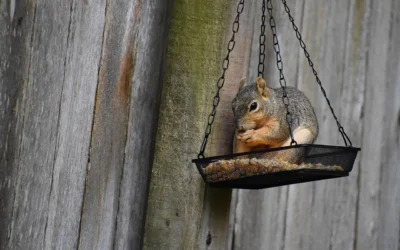
Ant prevention works best as part of a regular feeder maintenance routine rather than a one-time fix. A feeder that’s cleaned and checked for spillage every week or two rarely develops a serious ant problem in the first place, since colonies need a consistent, uninterrupted food source to become established. If squirrels are also raiding the feeder and contributing to the spillage, our complete guide to squirrel baffles covers ways to address that separately, since a spilled feeder from squirrel activity can undo ant prevention efforts just as easily as a leaky port can.
Frequently Asked Questions
Is an ant moat safe for the birds?
Yes, an ant moat is simply a small water reservoir and poses no risk to visiting birds. It’s widely considered the safest and most effective ant prevention method for hanging feeders. Just keep it topped off with clean water, and skip adding any chemicals or repellents to it, since that defeats the purpose of a purely physical barrier method.
Will ants harm the birds directly?
Ants themselves generally don’t harm birds, but a heavy ant presence can make a feeder unappealing enough that birds avoid it, and heavy ant traffic often signals a spillage or cleanliness issue worth addressing anyway. Large numbers of ants around a feeding station can also attract other pests looking to take advantage of the same food source, so it’s worth treating as more than a purely cosmetic issue in the yard.
Can I use a DIY ant moat?
A small cup or bottle cap threaded onto the hanging line and filled with water can work as an improvised moat, though a purpose-built moat designed for outdoor use tends to hold up better over time, particularly through repeated rain and wind that can tip a makeshift version and spill the water out. A wide, shallow container is generally more stable in wind than a narrow, tall one, worth keeping in mind if building an improvised version yourself.
Does moving the feeder a few feet actually help?
It can, particularly if the current spot is close to a nest, but a moat or better spillage control usually solves the problem more reliably than relocation alone, since a new spot with the same spillage habits will likely attract a different colony over time.
Write Your Review
No reviews yet. Be the first to share your experience!