

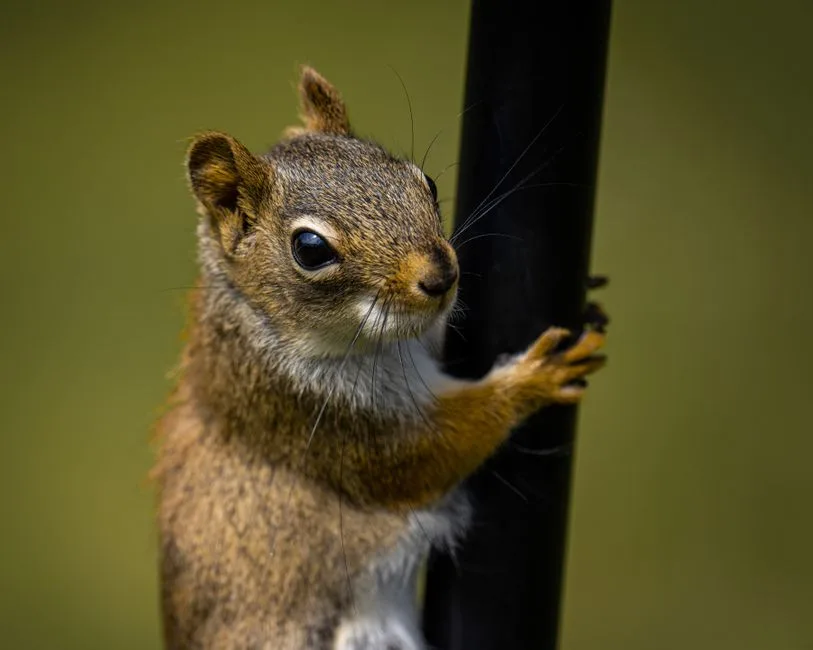
Yes, squirrels can climb a bare metal pole, though not as easily as a rough wooden post or a tree trunk. Understanding why a metal pole is harder, but not impossible, for a squirrel to climb explains why a baffle still matters even on a pole material that’s already somewhat squirrel-resistant on its own. This guide covers the mechanics behind it and what that means for your setup.
What Makes a Surface Climbable for a Squirrel
Squirrels climb using sharp, curved claws that dig into small irregularities in a surface, bark ridges, wood grain, rough concrete, rather than gripping the way a hand would. The rougher and more textured a surface, the more purchase those claws find. A smooth surface removes most of that purchase, which is exactly why smooth metal is harder to climb than bark or wood, and why the same squirrel that scales a tree trunk without hesitation can struggle noticeably on a bare metal pole nearby.
Why Metal Poles Are Harder, Not Impossible
A powder-coated or painted metal pole is significantly smoother than tree bark at the scale a squirrel’s claws operate on, which is why metal poles are a common baseline choice for feeder setups even before adding a baffle. But smooth isn’t the same as frictionless. A squirrel can still climb a metal pole using body-hugging technique, wrapping its legs partway around a narrow pole to add grip through pressure rather than claw purchase alone, especially on poles under about an inch and a half in diameter, a technique that works even better if the squirrel can brace against a nearby wall or fence while climbing.
Diameter Matters as Much as Material
A thin metal pole is easier to climb than a thick one, because a squirrel can wrap its body around a narrow pole and use pressure grip the way it would climb a thin branch. Wider poles remove that option, forcing the squirrel to rely on claw purchase alone against a surface that doesn’t offer much. This is part of why some feeder poles are deliberately sold at a wider diameter than strictly necessary for stability, since the extra width is doing double duty as a mild deterrent on its own.
Weather Changes the Equation
A dry metal pole and a wet or icy one behave very differently. Moisture reduces whatever marginal grip a squirrel had, which is part of why some baffle setups that struggle in summer perform better after a rain, and part of why others fail specifically during wet weather if condensation collects at a vulnerable point like a clamp seam. Frost and ice generally make a metal pole harder to climb than rain does, at least until the ice itself provides an unexpected foothold near a joint or bracket.
Climbing Isn’t the Only Way In
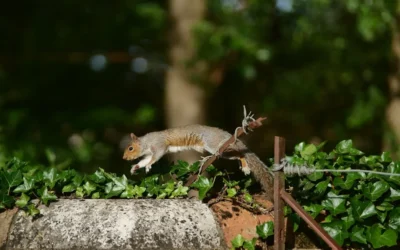
Even a pole a squirrel genuinely can’t climb doesn’t fully solve the problem if there’s a nearby branch, fence, or roofline a squirrel can jump from instead. A hard-to-climb metal pole pushes squirrels toward jumping as the more viable approach, which is a separate problem with its own fix. See our guide on how far a squirrel can jump for what counts as a risky launch point near your setup.
Why a Baffle Still Matters on a Metal Pole
A bare metal pole slows squirrels down and discourages casual attempts, but it doesn’t stop a motivated animal the way a properly placed baffle does. The pole material reduces the problem, the baffle solves it, and relying on pole material alone leaves a gap that a persistent squirrel will eventually find. See our complete guide to squirrel baffles for how the two work together in a full setup.
Metal vs Other Common Pole Materials
Wood, especially rough-sawn lumber, gives claws far more purchase than powder-coated metal and is generally the easiest common pole material for a squirrel to climb without a baffle. PVC and other smooth plastics behave similarly to metal in offering little claw purchase, though plastic poles can flex or bow more under a squirrel’s weight, which changes the climbing dynamics slightly. Our metal vs plastic baffle comparison covers the baffle side of this same material question.
What This Means for Your Setup
If you’re choosing a pole from scratch, a smooth metal pole gives you a head start over wood, and a wider diameter adds a bit more resistance still. Neither replaces a correctly sized and positioned baffle, but combining pole material with a baffle is more effective than either alone. Our roundup of baffles for feeder poles covers options built specifically for metal pole setups.
If Squirrels Are Getting Up a Metal Pole Anyway
A squirrel reaching the top of a bare or lightly protected metal pole usually means either the pole is narrow enough for body-hugging technique, the finish has worn smooth in a way that’s actually easier to grip, or the squirrel is exceptionally motivated by a lack of other food sources nearby. Adding a properly sized baffle addresses all three causes at once, since it removes the climbable surface entirely rather than relying on the pole alone. Our full squirrel baffle collection covers options for a range of pole diameters.
Frequently Asked Questions
Do squirrels avoid metal poles entirely?
No. A bare metal pole discourages casual attempts and slows a squirrel down, but a motivated, hungry squirrel will still attempt and sometimes succeed at climbing one, particularly a narrower pole. Metal reduces the problem rather than eliminating it on its own.
What pole diameter is hardest for squirrels to climb?
Wider poles are generally harder to climb than narrow ones, since a squirrel loses the ability to wrap its body around the pole for extra grip. There’s no single diameter that guarantees success, since a determined squirrel and a well-positioned launch point nearby can still bypass even a wide pole through jumping rather than climbing.
Does the pole’s finish, powder-coated versus bare, make a difference?
A smooth powder-coated finish generally offers less claw purchase than bare, slightly textured metal, though the difference is smaller than the difference between metal and wood or rough concrete. Diameter and weather conditions typically matter more than finish alone.
Can raccoons climb metal poles the same way squirrels do?
Raccoons are heavier and use a different climbing technique than squirrels, generally relying more on strength and grip than the lightweight body-hugging technique squirrels use on narrow poles. A pole and baffle combination sized for squirrels may not be sufficient against a raccoon, which typically needs a heavier-duty setup.
Is a wider metal pole always better for squirrel resistance?
Generally yes for climbing resistance, since a wider pole removes the body-hugging technique squirrels rely on for narrow poles. A wider pole doesn’t help against jumping, though, so pairing it with adequate distance from nearby launch points still matters. Our heavy-duty baffle roundup covers baffles built for wider poles and higher-pressure yards.
Do young squirrels climb metal poles as well as adults?
Young squirrels are generally lighter and less experienced, which can work either way: less weight sometimes makes climbing easier on a marginal surface, while less refined technique can make a genuinely difficult pole harder for them than for an adult. Neither difference is large enough to change how you should size or position a baffle.

Write Your Review
No reviews yet. Be the first to share your experience!