

A squirrel baffle only works if it’s mounted correctly. The most common reason a baffle “doesn’t work” isn’t the baffle itself, it’s installation: wrong height, mounted too close to a jump-off point, or not secured well enough to stay level. This guide walks through installing a baffle step by step, across the most common mounting setups.
For background on how baffles work and which style to buy, see our Squirrel Baffles: The Complete Guide.
What You’ll Need
- The baffle, sized for your pole, post, or hook diameter
- A tape measure
- Whatever mounting hardware came with the baffle (clamps, set screws, or a wrap-around hinge, depending on the model)
- A screwdriver or wrench if the baffle uses set screws or clamps
Step 1: Pick the Mounting Point
Before touching the baffle, walk the spot where the feeder pole, post, or hook already stands (or will stand) and check its distance from trees, fences, rooflines, and anything else a squirrel could jump from. If the spot is close enough for a squirrel to jump past a baffle entirely, no baffle will fix that on its own. Moving the feeder, or accepting some squirrel traffic, may be the more realistic fix. See Installation for more on judging jump distance.
Step 2: Mount the Baffle
Exactly how it attaches depends on the mounting type:
4×4 Wooden Post
Wrap-around baffles designed for 4×4 posts open on a hinge and close around the post, then secure with a screw or bolt. Cylinder baffles built for posts usually need the post pre-drilled for a mounting bracket. Follow the specific product’s hardware, but in general, avoid over-tightening screws directly into the post if the baffle needs to move or wobble slightly, some designs rely on that wobble to work.
Shepherd Hook
Shepherd hooks are usually thinner than a 4×4 post, so baffles made for them typically use a slide-on cone or dome with a set screw, or a wrap-around clamp sized for a narrower pole. Check the baffle’s minimum and maximum pole diameter before buying, a hook that’s too thin for a given baffle will let it spin or slide instead of sitting where you want it.
Straight Metal Pole
Slide-on baffles for straight poles rest on a stop point, either a built-in ridge on the pole or a separate mounting collar. Cylinder baffles that wrap the pole itself usually clamp on with screws. Make sure the baffle can’t be pushed back up the pole by a determined squirrel, some poles need an added stop collar below the baffle to keep it from sliding.
Hanging Feeders
Dome baffles for hanging feeders usually thread onto the hanging wire or chain above the feeder, positioned so the dome sits above the feeder and blocks squirrels from climbing down the support line.
Step 3: Set the Height
For pole and post-mounted baffles, the baffle itself generally needs to sit a few feet off the ground, high enough that a squirrel can’t reach it from a standing jump. If you’re not sure, mount it as high as the pole allows while still keeping the feeder at a reasonable height for refilling and viewing.
Step 4: Recheck Clearance
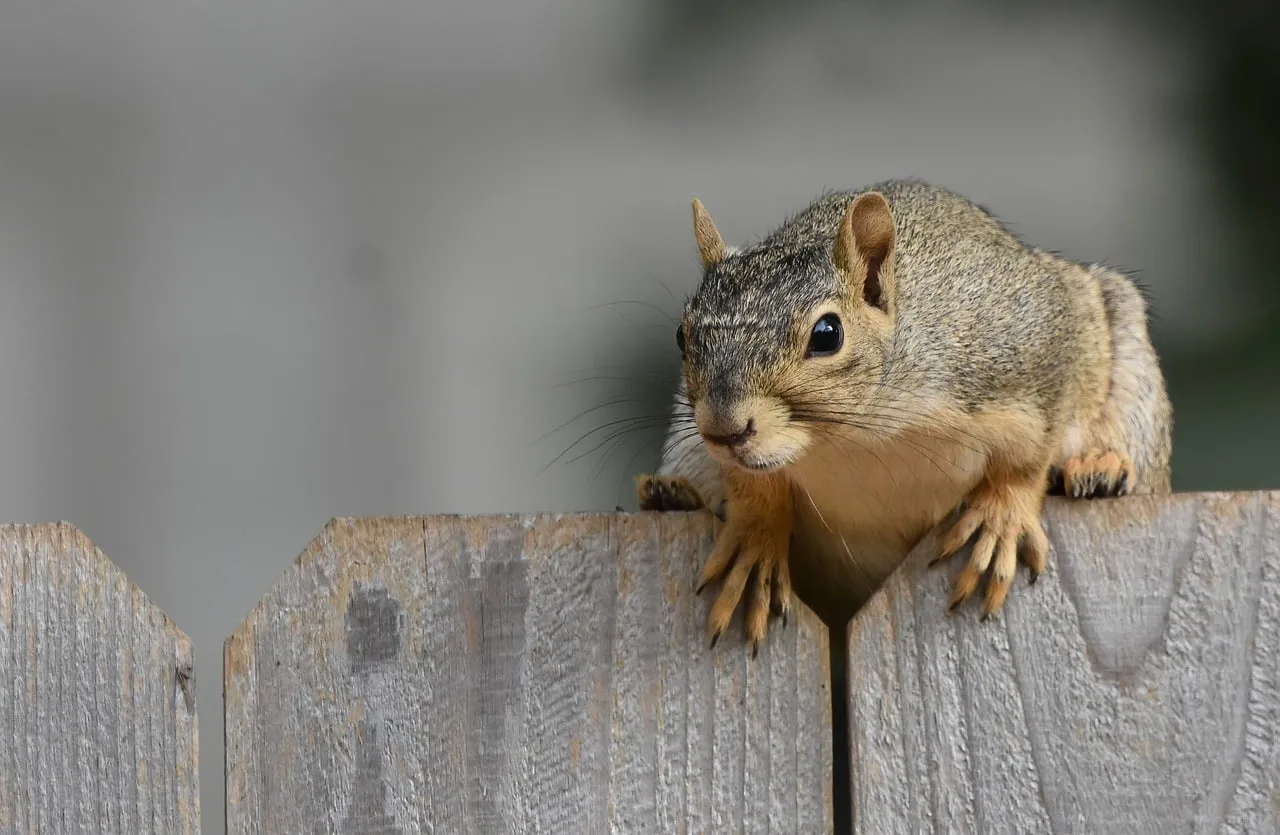
Once the baffle is mounted, look again from a squirrel’s-eye view: is there anything within jumping distance, a branch, a fence rail, a rooftop, a piece of patio furniture, that a squirrel could use to bypass the baffle entirely by jumping onto the feeder from the side or above? If so, either move the setup further away or trim back what’s nearby.
Step 5: Check the Mount
Give the baffle a firm push or shake by hand. It should stay roughly level and shouldn’t slide down the pole under its own weight. A baffle that immediately droops or spins out of position after installation will need a tighter fit, a stop collar, or different hardware.
Common Installation Mistakes
- Mounting too low. A baffle within easy jumping height of the ground gets bypassed regardless of size.
- Ignoring nearby jump-off points. A well-installed baffle can still fail if a tree branch or fence is close enough.
- Over-tightening a baffle that’s meant to wobble. Some designs depend on instability to work, locking them rigid can defeat the design.
- Skipping a stop collar on a slide-on baffle. Without one, the baffle can slide down the pole over time and stop doing its job.
- Using a baffle sized for the wrong pole diameter. Too loose and it spins or slides, too tight and it may not fit at all.
A Note on Safety
Most baffle installations don’t require a ladder, but if your setup does, don’t work from a ladder alone at height if you can avoid it. If mounting hardware involves drilling into a post, fence, or wall, check for buried or overhead utility lines first.
Still Having Trouble?
If squirrels are still reaching the feeder after a correct installation, the issue is usually placement rather than the baffle itself, most often distance from a tree, fence, or roofline. See How High Should a Squirrel Baffle Be? to recheck mounting height, or Why Is My Squirrel Baffle Not Working? for the full troubleshooting checklist. For an overview of baffle types and sizing, head back to Squirrel Baffles: The Complete Guide.
Frequently Asked Questions
Do I need to remove my existing feeder to install a baffle?
It depends on the baffle style. Wrap-around and hinged designs are built specifically to close around a pole without removing what’s already mounted above or below it, while slide-on baffles usually need to go on before the feeder or bracket is attached, or before removing the top of the pole assembly. Check the product’s installation instructions before assuming you’ll need to take the whole setup apart.
How tight should mounting hardware be?
Tight enough that the baffle doesn’t slide, tilt, or spin under normal handling, but not so tight that it prevents the wobble some spring-mounted designs rely on to work. Follow the manufacturer’s instructions on this specifically, since over-tightening a baffle that’s meant to move can defeat the design just as easily as under-tightening one that’s meant to stay rigid.
Can I install a baffle myself, or does it need a professional?
Most baffle installations are a straightforward do-it-yourself job with basic tools, a tape measure and a screwdriver or wrench in most cases. The main exception is if mounting requires working from a ladder at height, drilling into a structure near utility lines, or handling a heavy complete pole system alone, any of which are reasonable to hire out if you’re not comfortable doing them solo.
What should I do if the baffle doesn’t match my pole’s exact diameter?
A baffle that’s slightly loose can sometimes be shimmed or paired with a stop collar to keep it in place, but a baffle that’s meaningfully too large or too small for the pole usually isn’t worth forcing. Measure before ordering, and if you’re already stuck with a mismatched baffle, it’s generally more reliable to exchange it for the correct size than to improvise a fix. Budget a little extra time for your first installation on an unfamiliar mount type as well, getting the height and clearance right sometimes takes a second look and a small adjustment after the baffle is already up, rather than getting everything perfect on the first attempt.


Write Your Review
No reviews yet. Be the first to share your experience!