

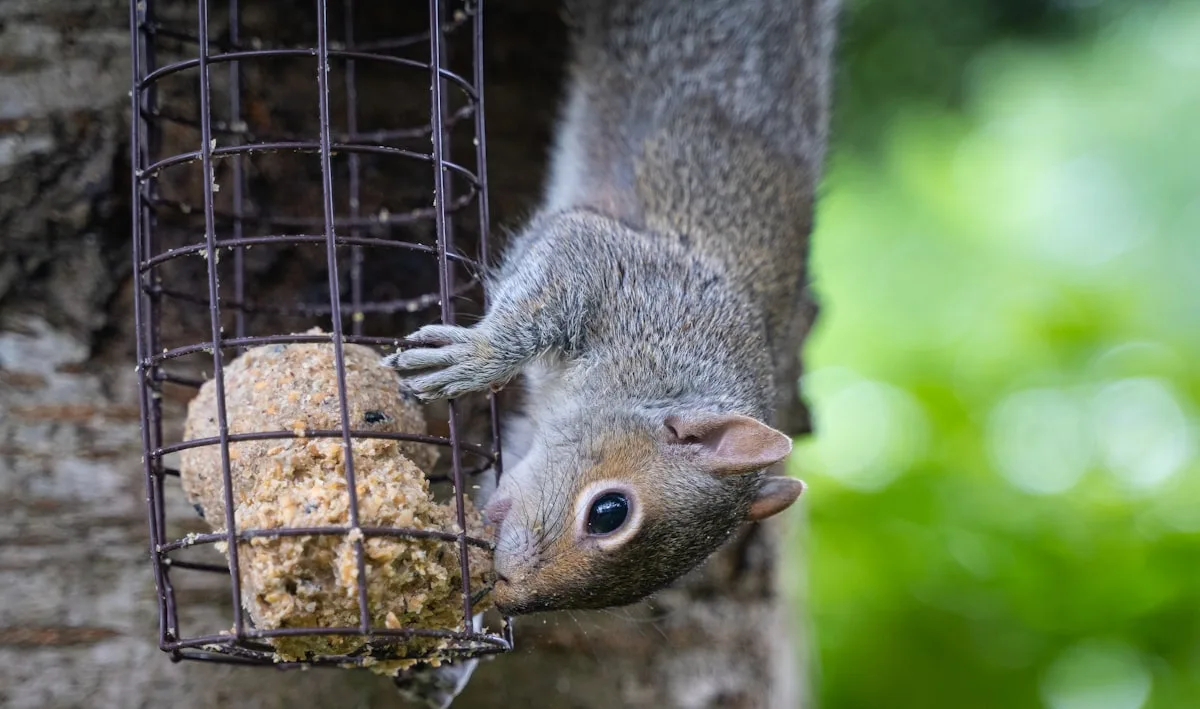
If squirrels are emptying your bird feeder faster than the birds can eat, a squirrel baffle is usually the first thing worth adding to your setup. This guide covers what a baffle actually is, how the different designs work, how to pick the right one for your post, pole, or hook, and the basics of installing it correctly.
What Is a Squirrel Baffle?
A squirrel baffle is a dome, cone, or cylinder-shaped barrier mounted above or below a bird feeder to block squirrels from climbing up a pole or dropping down from above to reach the seed. It doesn’t harm squirrels. It works by making the climb physically difficult or impossible: too wide to reach around, too steep to grip, or angled so a squirrel’s weight tips it before they can climb past.
Baffles are a passive, physical deterrent rather than a chemical or trapping solution, which is why they’re the standard first step for keeping a feeder squirrel-resistant without harming local wildlife.
How Squirrel Baffles Work
Most baffles rely on one or both of these mechanics:
- Diameter: a dome or cylinder wide enough that a squirrel can’t reach around it or get a grip on the edge while climbing a pole.
- Instability: pole-top baffles are often mounted loosely so they wobble or tip under a squirrel’s weight, making the climb unstable enough that most squirrels give up.
A baffle only works if it’s the right size and mounted at the right height and distance from jump-off points like trees, fences, or rooflines. A well-made baffle mounted too low, or too close to a tree branch, can still get bypassed.
Types of Squirrel Baffles
Dome Baffles
The most common style. Mounted above a hanging feeder or below a pole-top feeder, shaped like an upside-down bowl. Blocks squirrels from climbing up from below or dropping down from above, depending on placement.
Cone Baffles
Similar purpose to dome baffles but with a steeper, more angular profile. Often used on poles and 4×4 posts where a wider dome doesn’t fit the mounting hardware.
Cylinder (Wrap-Around) Baffles
A tube-shaped baffle that wraps around a pole or post. Instead of blocking the top, it makes the pole itself too wide and unstable to climb. Common on straight metal poles.
Slide-On vs. Wrap-Around
Slide-on baffles fit over the top of a pole and rest at a fixed point. Wrap-around baffles clamp or hinge open around a post that already has a feeder or bracket attached, which matters if you can’t remove what’s already mounted to install the baffle.
How to Choose the Right Baffle
Work through these in order:
- What are you mounting it on? A 4×4 wooden post, a shepherd hook, a straight metal pole, or a hanging feeder each favor different baffle styles and mounting hardware.
- What size do you need? Diameter matters more than most buyers expect. A baffle that’s too small for the local squirrel population, or too small relative to nearby jump-off points, is easier to bypass.
- Metal or plastic? Metal tends to hold up better to chewing and weather over time. Plastic is usually lighter and less expensive, and can work fine in yards with less determined squirrels.
- Does it fit what’s already there? Check pole or post diameter and whether you’ll need to remove an existing feeder bracket to install it.
Placement and Installation Basics
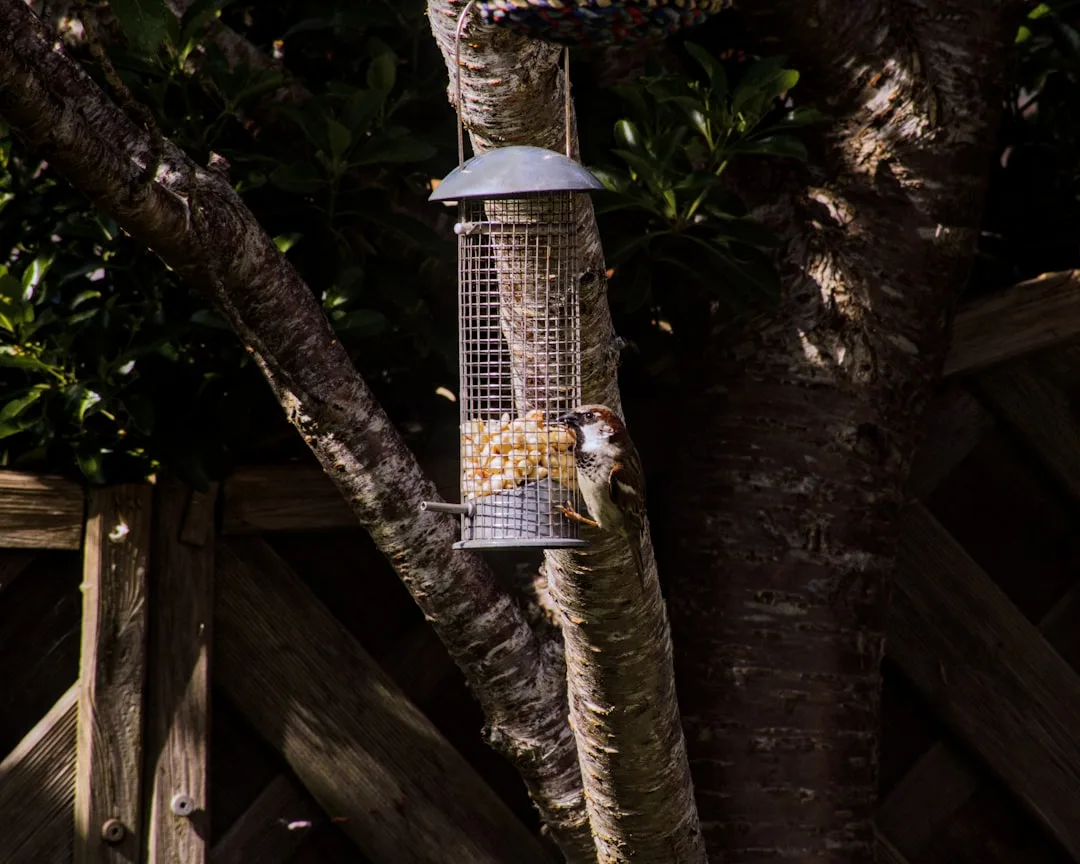
Even a well-built baffle underperforms if it’s placed wrong. Three things matter most:
- Height: pole-mounted baffles generally need to sit at least a few feet off the ground, high enough that a squirrel can’t jump directly over or past them from a standing start.
- Distance from trees, fences, and rooflines: squirrels are strong jumpers. A baffle can be doing its job perfectly and still get bypassed if a feeder is close enough to a tree branch or fence for a squirrel to jump the rest of the way.
- A secure, level mount: a baffle that’s loose in the wrong way, tilted, or sliding down the pole over time stops doing its job.
If installation involves a ladder or mounting hardware into a tree, fence, or wall, take normal precautions: don’t work from a ladder alone at height if you can avoid it, and check for buried or overhead utility lines before drilling into a post or structure.
When a Baffle Alone Isn’t Enough
Baffles solve most climbing and dropping-in problems, but they’re not the only variable. Feeder placement relative to trees and structures, local squirrel size and persistence, and whether the feeder itself is squirrel-resistant all play a role. If squirrels are still getting through after installing a properly sized baffle in a reasonable spot, the next things to check are usually placement and distance from jump-off points rather than the baffle itself.
Next Steps
Once you know which mounting setup you’re working with, browse our Squirrel Baffles section for setup-specific picks, see How to Install a Squirrel Baffle for a step-by-step mounting guide, or check How High Should a Squirrel Baffle Be? for mounting height by setup.
Frequently Asked Questions
Do squirrel baffles work on all types of bird feeders?
Baffles work on any feeder mounted on a pole, post, or hanging line, which covers most setups, but the right baffle style depends on how the feeder is mounted. A pole-top feeder needs a baffle below it blocking the climb up, while a hanging feeder needs a baffle above it blocking the drop down the support line. Match the baffle type to your mounting style rather than assuming one design works everywhere.
How long do squirrel baffles typically last outdoors?
It varies by material and how much squirrel pressure the baffle sees. A well-made metal baffle can hold up for years under normal conditions, while plastic varies more depending on thickness, UV exposure, and how often squirrels chew at it. See our Metal vs Plastic Squirrel Baffles comparison for the full durability breakdown.
Can one baffle work for more than one feeder?
If multiple feeders hang from the same pole or system below a single baffle, one baffle can protect all of them, since it’s blocking the shared climbing route rather than any individual feeder. Feeders mounted on separate poles or hooks each need their own baffle.
Do squirrel baffles stop other animals too, like raccoons or chipmunks?
Many baffles that are sized and rated for squirrels also deter smaller or similarly sized climbers like chipmunks, and some heavier-duty baffles are explicitly rated for raccoons as well. Check the specific product’s stated coverage rather than assuming, since a baffle sized for squirrels alone may not hold up against a heavier raccoon.
Is a squirrel baffle a permanent fix, or do squirrels eventually get past it?
A correctly sized baffle mounted at the right height and far enough from jump-off points is a durable fix for most yards, but no baffle is completely foolproof against every individual squirrel indefinitely. Persistent squirrel pressure, a growing local population, or changes in your yard over time, a tree branch growing closer, for example, can require occasional adjustments. See Why Is My Squirrel Baffle Not Working? if a previously effective setup stops working. If raccoons are a regular visitor rather than an occasional one, look specifically for a baffle rated for raccoon weight and grip strength, since a baffle sized purely for squirrels may not hold up the same way against a larger, stronger animal pushing against it repeatedly.
Write Your Review
No reviews yet. Be the first to share your experience!