

Tube and hopper feeders are the two most common styles for everyday backyard bird feeding, and both work well, but they suit slightly different setups and priorities. Here’s how they compare across the factors that actually affect day-to-day use, so you can decide which fits your yard and the birds you’re hoping to see.
What Each One Is
Tube Feeders
A tube feeder is a cylindrical seed reservoir, usually made from plastic or metal-capped clear tubing, with multiple feeding ports and small perches spaced evenly along its length. Most tube feeders hold a moderate amount of seed and are designed for smaller songbirds like finches, chickadees, and titmice. The narrow perches and ports are part of the design, favoring smaller, more agile birds over larger ones that may struggle to balance comfortably.
Hopper Feeders
A hopper feeder is a box or house-shaped reservoir with a peaked roof, seed dispensing to an open tray or ledge along the bottom edges. Hoppers tend to hold more seed than a comparable tube feeder and accommodate a wider range of bird sizes, from small finches up to larger cardinals and jays. The open tray design also makes it easy for several birds to feed at once without waiting for a port to free up.
Side-by-Side Comparison
Bird Species Attracted
Tube feeders favor smaller, more agile perching birds due to their narrow ports and short perches, and are especially good for finches when fitted with fine mesh ports for nyjer seed. Hopper feeders accommodate a broader mix, including larger birds that need more room to land and feed comfortably, like cardinals, jays, and grosbeaks. If a specific species is your main goal, matching feeder style to that bird’s typical feeding behavior usually gets better results than a generic choice, and a quick search on the species you’re targeting will usually tell you which style it prefers.
Seed Capacity
Hopper feeders generally hold more seed by volume, meaning fewer refills for households that feed heavily or can’t check the feeder daily. Tube feeders hold less but are often easier to fill precisely and monitor at a glance thanks to their clear or semi-clear construction. If you travel frequently or want to minimize maintenance trips, the larger capacity of a hopper feeder is a real practical advantage worth weighing.
Weather Resistance
A hopper feeder’s peaked roof naturally sheds rain and snow away from the seed reservoir, keeping contents drier in wet weather. Tube feeders vary more by design, some include a built-in cap or hood that offers similar protection, while others leave the top ports more exposed to blowing rain. If you live somewhere with frequent rain, checking for a domed cap or wide overhanging cap on a tube feeder before buying is worth the extra minute.
Cleaning
Tube feeders typically disassemble into fewer, simpler parts for cleaning, though narrow ports can be fiddly to scrub thoroughly, and a bottle brush or pipe cleaner makes reaching the port openings much easier. Hopper feeders often have more surface area and corners where seed debris and grime collect, which can mean a bit more work at cleaning time, particularly around the tray edges where seed hulls and moisture tend to build up.
Squirrel Resistance
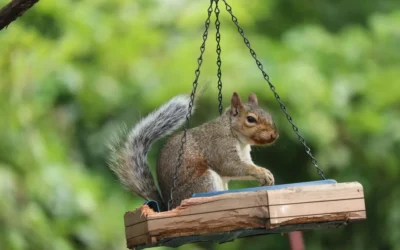
Neither style is inherently squirrel-proof on its own, both are readily chewed through or raided by a determined squirrel without additional protection. Some tube feeders come with metal cages or weight-activated perches built in specifically to address this, and hopper feeders sometimes include a weight-sensitive perch bar that closes access ports when a heavier animal lands. Our squirrel-proof feeder roundup covers models from both styles with genuine exclusion mechanisms rather than marketing language alone.
Price
Basic versions of both styles are widely available at similar entry-level price points, with cost climbing for either style once you add metal cages, larger capacity, or premium materials like copper or cedar. A more expensive feeder isn’t automatically the better choice, matching the feature set to what your yard actually needs matters more than spending as much as possible on features you may never use.
Which Should You Choose?
Choose a Tube Feeder If
You mainly want to attract finches and other small songbirds, prefer a feeder that’s easy to monitor at a glance, or have limited mounting space where a slimmer profile fits better. A tube feeder is also a solid pick for a first feeder if you’re trying out a specific spot in the yard before committing to a larger setup.
Choose a Hopper Feeder If
You want to attract a wider mix of species including larger birds, prefer fewer refill trips thanks to higher seed capacity, or want strong natural weather protection for the seed without buying an add-on hood. A hopper feeder is also a reasonable default if you’re not sure yet which species are common in your yard and want to appeal broadly while you find out, since its open design doesn’t exclude any particular size of bird.
Or Use Both
Many backyard setups run one of each, giving smaller and larger species their own space and reducing crowding at any single feeder, and spacing the two feeders a few feet apart tends to work better than placing them right next to each other. If you’re just starting out, our complete guide to bird feeders covers the full range of styles beyond just these two, including suet and platform options for species that neither tube nor hopper feeders suit especially well.
Frequently Asked Questions
Which style attracts more birds overall?
Neither is universally better, it depends on which species are common in your area. A yard with mostly finches and chickadees may see more action at a tube feeder, while a yard with cardinals and jays often favors a hopper. Watching what visits over the first few weeks after installing either one gives you a much better read than guessing in advance, and that observation period is often more useful than any general rule of thumb.
Is one style easier for a beginner?
Hopper feeders are often considered slightly more forgiving for beginners due to their simple fill-and-go design and broad appeal across species, though tube feeders aren’t meaningfully harder to use once you’re familiar with removing the cap and refilling from the top or bottom depending on the model.
Can I use the same seed in both?
Black oil sunflower seed works well in both styles and is a reasonable default if you’re only buying one type of seed. Tube feeders with fine mesh ports are also a good match for nyjer seed specifically if you’re targeting finches, while hopper feeders handle mixed blends and larger seed types more comfortably given their wider dispensing tray.
Which is better in a yard with squirrels?
Style matters less than whether the specific model has a real squirrel-resistant mechanism, like a metal cage or weight-activated closure, so read the product description carefully rather than assuming either style is naturally safer. A baffle on the mounting pole helps regardless of which feeder style you choose, since it addresses access to the feeder itself rather than relying on the feeder’s own design. See our complete guide to squirrel baffles for pole-mount options that work with either style.
Write Your Review
No reviews yet. Be the first to share your experience!