

A caged feeder and a squirrel baffle both genuinely stop squirrels, but they work at completely different points in the setup. A cage surrounds the feeder itself, physically too small for a squirrel to reach the food inside. A baffle blocks the climb up the pole before a squirrel ever reaches the feeder. Choosing between them, or deciding you need both, comes down to what’s actually failing in your current setup and how much you want to change.
At a Glance
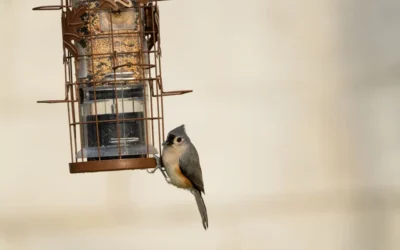
A caged feeder wraps a wire barrier around the feeding ports, letting small birds squeeze through gaps that are too narrow for a squirrel’s larger body to fit through. A baffle is a separate accessory mounted on the pole below the feeder, blocking the climbing route entirely rather than restricting access at the feeder itself.
What Each One Actually Blocks
A cage stops squirrels regardless of how they approach, climbing, jumping, or reaching from above, since the barrier surrounds the food itself at every angle. A baffle only blocks the climbing route up the specific pole it’s mounted on. A squirrel that jumps onto the feeder from a nearby branch bypasses a baffle entirely but still can’t get through a properly sized and well-built cage.
This is the core tradeoff: a cage protects the food source itself from any angle, while a baffle protects one specific access route. See our guide on how far a squirrel can jump if launch points near your feeder are a concern.
Installation and Setup
A caged feeder is typically a single purchase that replaces your existing feeder entirely, no separate installation step needed beyond hanging or mounting it the same way as any other feeder would be. A baffle is an add-on to an existing pole or post setup, which means measuring your mount, choosing a compatible size, and installing it correctly at the right height. Our baffle installation guide covers that full process if you go this route instead.
Which Birds Can Still Access the Food
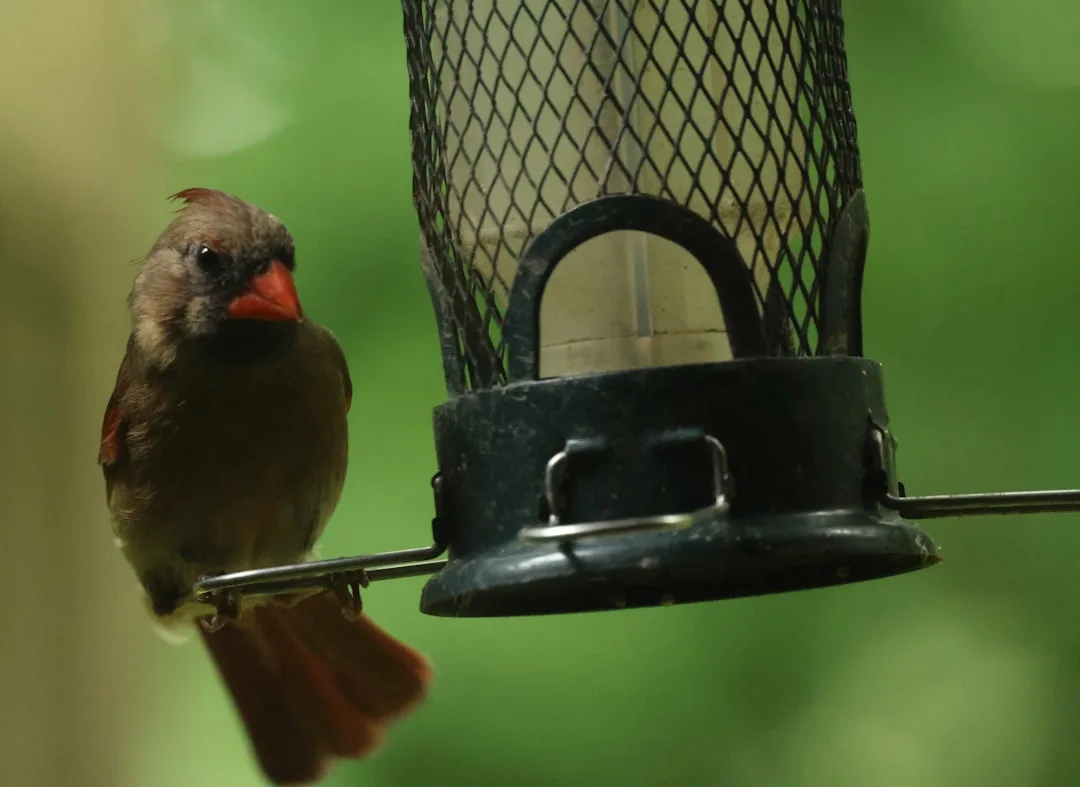
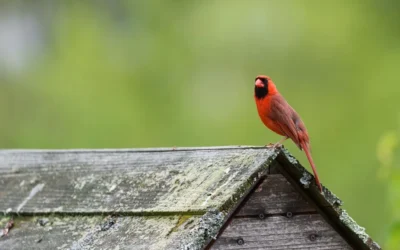
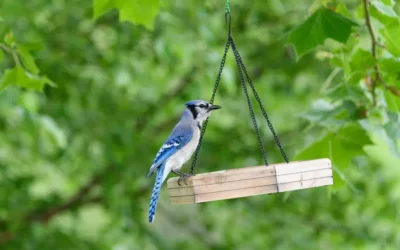
A cage is selective by size, small birds like chickadees and finches pass through easily, while larger birds such as cardinals or blue jays may struggle to reach the ports depending on the cage’s exact gap width. A baffle doesn’t restrict bird size at all, since it only affects the pole itself, so any bird that can normally reach your feeder still can once a squirrel-blocking baffle is in place below it.
If attracting larger birds matters to you, check a caged feeder’s gap dimensions carefully before buying, since this varies noticeably between models.
Cost and Replacement
A caged feeder replaces your existing feeder, so the cost includes the full feeder, not just an add-on accessory bolted onto something you already own. A baffle is generally cheaper on its own since it adds to a feeder you already own rather than replacing it entirely. If your current feeder still works fine and just needs pole protection, a baffle is often the lower-cost fix overall.
Durability Over Time
A cage physically takes the brunt of repeated squirrel attempts directly, since it’s the barrier squirrels interact with constantly. Chewing, clawing, and body weight against the wire mesh over months or years can eventually weaken a lower-quality cage. A baffle, mounted lower on the pole, absorbs less direct contact since a well-placed one stops most squirrels before they ever reach the top.
Metal cages with a chew-proof rating tend to hold up considerably better over the long run than lighter-gauge alternatives, similar to how metal baffles outlast plastic ones under sustained pressure over multiple seasons.
Placement Flexibility
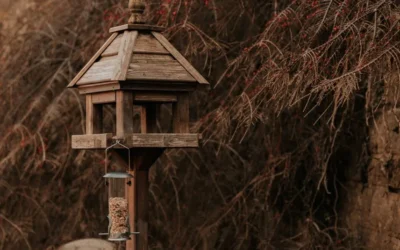
A caged feeder works anywhere you can hang or mount a feeder, a tree branch, a shepherd hook, a bracket on a deck, without needing a specific pole setup underneath it. A baffle only works on a mount it can physically wrap around or clamp onto, which means hanging feeders without a pole beneath them can’t use a baffle at all.
If your feeder hangs from a tree branch or a hook with no pole running underneath it at all, a caged feeder is really the only one of these two options that applies. See our hanging feeder baffle roundup for the specific edge case where a baffle can still work on a hanging setup.
Which Should You Choose?
Choose a caged feeder if squirrels are reaching your feeder from multiple angles, jumping from branches, climbing from unexpected directions, since a cage solves the problem regardless of approach. Choose a baffle if your feeder itself already works fine and squirrels are strictly climbing the pole to reach it, since a baffle is the simpler, cheaper fix for that one specific failure mode. Our squirrel-proof feeder roundup and squirrel baffle guide cover picks for each path forward.
When to Use Both
High squirrel-pressure yards sometimes combine a caged feeder with a baffle on the same pole for extra assurance, particularly if a determined squirrel population has already defeated one approach on its own. This is more setup and cost than most yards need, but it’s a reasonable next step if you’ve already tried one method carefully and squirrels are still consistently getting through despite that effort.
Frequently Asked Questions
Is a caged feeder more effective than a baffle?
Neither is universally more effective, since they solve genuinely different problems. A cage protects the feeder from any angle of approach, while a baffle blocks climbing on one specific pole only. If squirrels are jumping onto your feeder rather than climbing up to it, a cage handles that case a baffle simply can’t.
Can I add a cage to my existing feeder instead of replacing it?
Some standalone cage accessories are sold separately to fit around an existing feeder, though fit varies quite a bit by feeder shape and size. Most buyers find it simpler to choose a feeder with the cage built in from the start rather than retrofitting one onto an existing feeder.
Do cages keep out larger birds I want to feed?
It depends entirely on the specific cage’s gap width. Some are sized to admit cardinals and jays alongside smaller birds, while tighter designs favor smaller species only. Check the product listing’s stated dimensions carefully if attracting larger birds matters to you.
Which option is easier to maintain?
A baffle needs very little ongoing maintenance beyond an occasional check for slipping or visible damage. A caged feeder has more surface area and moving parts, so cleaning takes a bit more regular attention, particularly around the cage itself where seed debris tends to accumulate.
Will a caged feeder work on a shepherd hook the same way a baffle does?
Yes, since a caged feeder protects the feeder itself rather than depending on the mount type at all. It hangs from a shepherd hook the same way any standard feeder would, without needing a baffle sized specifically for that hook’s thinner shaft.
Is it overkill to use a cage and a baffle together?
For most yards, yes, one method alone handles typical squirrel pressure just fine. Combining both makes more sense in yards with an unusually large or persistent squirrel population, or where one method has already been tried carefully and failed on its own.
Write Your Review
No reviews yet. Be the first to share your experience!